
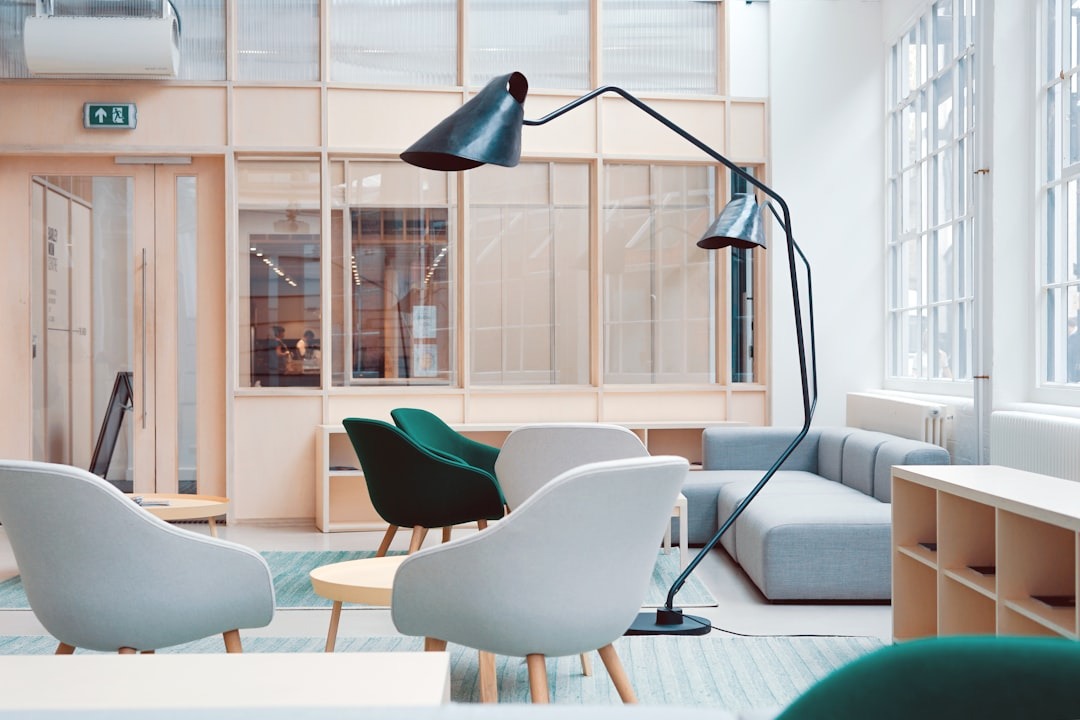
IoT-integrated furniture is not a Silicon Valley trend that will eventually reach Uganda. It is a design direction that Uganda’s fabricators are already positioned to lead — if we move with intention.
Somewhere in a flat in Amsterdam or an apartment in Seoul, there is a coffee table with a wireless charging pad built into its surface. A side table whose LED strip dims automatically when the room’s smart sensor detects sleep mode. A shelving unit whose internal lighting adjusts colour temperature to match the time of day. These are not concept pieces in a design magazine. They are in production. They are being sold.
At Generosity Metal Innovators, we are building toward this same territory — from Buloba, Wakiso, Uganda. This post is about what smart furniture is, why it matters, and why the fabricators best positioned to build it well are not necessarily the ones in Europe.
What IoT Furniture Actually Is
IoT stands for Internet of Things — the integration of sensors, microcontrollers, and wireless communication into physical objects. In furniture, this means the object itself becomes responsive: it can sense presence, respond to touch, connect to a phone, adjust its lighting, charge your devices, or report its status to a home automation system.
The most commercially viable IoT integrations in furniture right now are:
- Wireless charging surfaces — Qi charging pads embedded in table tops, completely flush with the surface
- Integrated LED systems — programmable lighting built into the structure, controllable via app or voice assistant
- Presence and touch sensors — furniture that activates when someone sits, stands, or approaches
- USB and power integration — discreet power outlets and data ports routed through the furniture frame
- Ambient environment response — pieces that adjust light colour or intensity based on time of day or room conditions
None of these require exotic components. A Qi charging module costs under $8 USD wholesale. An ESP32 microcontroller — capable of Wi-Fi, Bluetooth, and running LED control logic — costs under $5. The knowledge to integrate them is freely available. The barrier is not technology. It is fabrication skill.
“The barrier to smart furniture is not technology. It is fabrication skill — the ability to build a steel frame that routes cable cleanly, hides electronics invisibly, and still looks like a luxury object.”
Why Metal Fabricators Have an Advantage
Furniture that integrates electronics needs to do two things simultaneously: it needs to function as furniture, and it needs to function as an electronics housing. That second job — routing power cables invisibly, mounting components securely, managing heat dissipation, creating access panels for maintenance — is a fabrication problem, not a software problem.
A hollow steel tube is already a cable conduit. A welded steel frame already has the rigidity to mount a PCB without vibration stress. A powder-coated steel surface already provides the clean, hard finish that electronics need around them. The material is ideally suited to smart integration. A fabricator who understands steel geometry and joinery is closer to building smart furniture than a software engineer who has never welded.
At GMI, our current work already includes LED-integrated pieces — shelves and coffee tables where the light source is built into the frame, routed through the hollow section, and terminated at a driver box hidden in the base. The step from LED integration to full IoT integration — adding a microcontroller, a motion sensor, a wireless module — is a design and engineering step, not a manufacturing leap.
What SmartForge by GMI Is Building Toward
We are developing SmartForge as our dedicated smart furniture line — pieces designed from the first sketch with electronics as a structural consideration, not an afterthought. The first SmartForge pieces will be:
- A bedside table with Qi wireless charging flush-mounted in the top surface and a single USB-C port routed through the frame
- A coffee table with addressable LED underlighting, app-controlled colour and brightness, with a steel tensegrity or geometric base
- A wall-mounted shelving system with integrated ambient lighting, sensor-activated on room entry
These are pieces designed for the Kampala upper-market buyer and for international commission. The electronics specification will be published openly — buyers will know exactly what chip is inside, what protocol it uses, and how to replace a component in five years.
Where Africa Fits in the Smart Furniture Story
The global smart home market is expanding fastest in markets that are also building their middle and upper class fastest — Southeast Asia, parts of Latin America, and sub-Saharan Africa. Uganda’s growing urban professional class in Kampala is already buying smart TVs, smart speakers, and home automation hardware. The furniture has not caught up yet.
That gap is an opportunity. The fabricator who can deliver a Qi-charging coffee table with a Ugandan design identity — raw steel, geometric form, hand-finished — to a buyer in Kampala or Nairobi or Lagos is not competing with IKEA. They are in a category that does not yet have a dominant name. That name can be GMI.
The international side is equally open. Buyers in Europe and North America who want handcrafted furniture with technological integration have limited options. Most smart furniture is mass-produced and generic. A piece that is clearly hand-built, clearly has a story and an origin, and also charges your phone — that is a product with no direct competitor in its price bracket.
We are building it. Follow the SmartForge line on GenMetors.com as it develops.
SmartForge by GMI — Join the Waitlist
SmartForge pieces are currently in development. Register your interest and we will notify you when the first pieces are available for commission — including early-access pricing for subscribers.

Leave a Reply